Healing in Harmony: How Music Helped Bob Recover After Stroke
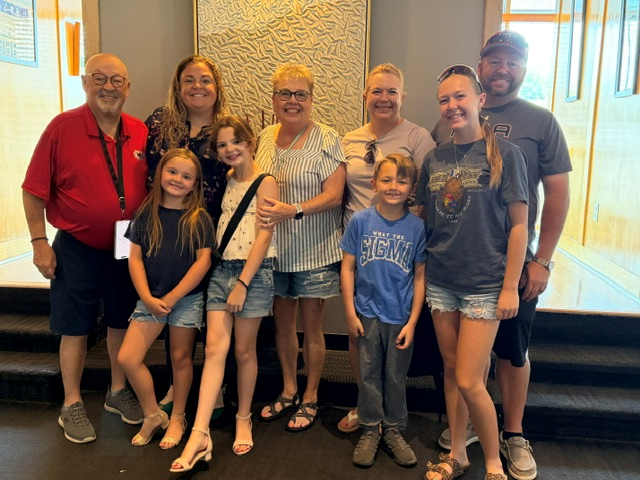
While everything seemed to be going wrong for Bob Bergquist, he found joy in song.
Bob suffered a stroke in May 2026 that severely affected his cognition and mobility. He spent several weeks recovering at Saint Luke’s Rehabilitation Institute, which included a music-based research study.
He thought it sounded abstract but trusted this part of his recovery to his care team.
“And that was the time of day I really looked forward to—to relax and listen to music,” Bob says.
Each session offered Bob a chance to slow down and focus on something beyond therapy schedules and medical appointments.
Now 76 and three months after his stroke, Bob can’t believe how much music helped his recovery.
A series of strokes
Bob has spent much of his life embracing new opportunities.
The Kansas native built a career in technology that took him and his wife, Kathy, around the world. He helped launch computer systems in Saudi Arabia, spent decades helping open and operate casinos throughout the Midwest, and eventually settled in Olathe, Kansas, to be closer to their children and four grandchildren.
In retirement, Bob enjoys spending time with his family and cheering from the sidelines at his grandchildren's softball games. But in May 2026, all that came to a halt.
Bob woke up early one morning feeling unwell and had trouble walking and speaking. Recognizing the warning signs of a stroke, his wife, Kathy, called the paramedics. This wasn’t Bob’s first stroke.
"We've learned that when something goes wrong, we just call 911 and get rolling," Bob says.
Bob had experienced transient ischemic attacks (TIAs) in both 2024 and 2025, putting him in the hospital for four and five days, respectively. TIAs are known as “mini strokes” caused by a temporary blockage of blood flow to the brain. The symptoms usually subside within a few hours, but a TIA is a warning sign that a bigger stroke is imminent.
Bob’s stroke in May was much more severe—he could hardly walk or talk.
He spent four days in the hospital following the stroke before transitioning to inpatient rehabilitation. As a longtime Saint Luke’s patient who trusted their care, Bob requested to go to the Rehabilitation Institute in Overland Park, Kansas, which allowed his primary care provider to better communicate with his care team.
And after just 12 days in rehab, he found himself making remarkable progress despite his limitations going in.
Finding comfort through music
During rehabilitation, Bob was invited to participate in a music-based intervention research study, Recovery through Intervention and Sound Engagement (RISE), led by Saint Luke's music therapist Amy Wilson, PhD, MT-BC, and neuroscience research director Stephanie Kolakowsky-Hayner, PhD, CBIST, FACRM.
“Music is a helpful tool in neurologic rehabilitation because of the way music is stored and processed in the brain,” Amy says. “By engaging in live music-based interventions, patients activate neuroplasticity, process emotions, and experience agency.”
Bob—who is not a trained musician—thrived in this creative setting. His sessions would include singing, playing instruments, and writing songs, all designed to support his brain's recovery.
But for Bob there was also an emotional component. He was able to involve Kathy in his rehabilitation, creating a more meaningful experience for both of them as they navigated recovery.
“It gave me an opportunity to do something I had never done,” Bob says.
Contributing to future of music therapy
In 2025, Amy and Dr. Kolakowsky-Hayner won a prestigious 2025 Arthur Flagler Fultz Research Award from the American Music Therapy Association, which provides funding for research on new and innovative music therapy treatments.
Their study, RISE, examines how music fosters hope, especially for individuals facing emotional, physical, and psychological challenges while recovering from a stroke.
Bob was one of the participants, which gave him another source of motivation during a difficult time.
“It was kind of exciting to be part of something new,” Bob says. “I don’t know how you can go wrong with music. Hopefully it helps other people down the road.”
With Bob’s help, Amy is excited to see what music can bring to stroke recovery.
“Music therapy is both art and science,” Amy says. “We know from experience that music shifts our attention and mood. When I meet patients, they often haven't had time to grieve what's happened. So, when I offer an aesthetic experience which carries meaning for them, they are then able to release those feelings. It's a sacred time to hold that space for somebody and then help them move forward.”
Looking ahead
Today, Bob continues outpatient therapy and is focused on improving his balance. His goal is to regain as much independence as possible and return to the activities he enjoys most.
That includes spending time with Kathy, staying close to his children and grandchildren, and being in the stands for softball games whenever possible.
And while the stroke changed the course of his year, Bob remains grateful for how far he has come.
“Given the shape I was in when I started rehab, it's almost a miracle that I'm at the point I'm at,” Bob says.
About Saint Luke’s Rehabilitation Institute
Saint Luke's Rehabilitation Institute is a one-of-a-kind facility that reimagines rehabilitation care for the 21st century with leading-edge technology and personalized treatment in a comfortable space close to home. Located on the Saint Luke's South Hospital campus, the Rehabilitation Institute helps patients recovering from stroke, brain, spine, cardiovascular, trauma, pulmonary, and orthopedic conditions by leveraging the latest equipment, research, and therapies. At the Rehabilitation Institute, the recovery outcomes match or exceed those of world-renowned facilities.
Relevant News
Patient Stories
Walking a New Path: How One Patient Turned Pain Into Passion
News
KCTV: Saint Luke’s Rehabilitation Institute’s Facility Dog Henli Joins My KC Live
Patient Stories
16,000 Steps A Day: Gina’s Bariatric Surgery Transformation
Patient Stories
Wife’s Quick Thinking Helps Husband
Patient Stories
Emergency Heart Care Helps Joan Celebrate Life’s Big Moments
News