5 Years After Stage 4 Breast Cancer Diagnosis, a New Treatment Helps Lori Defy the Odds
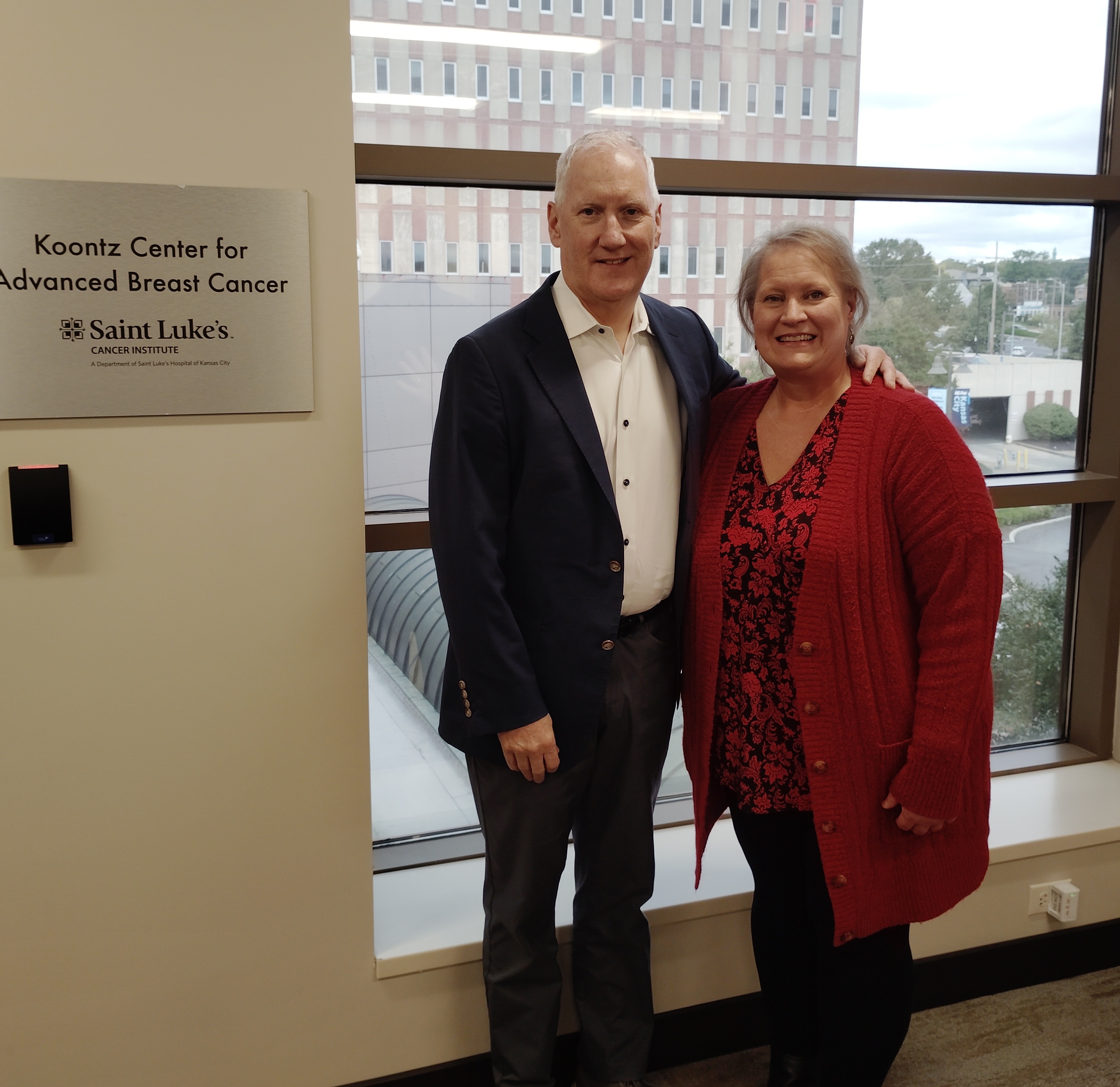
Timothy J. Pluard, MD, and Lori Anderson
Lori Anderson, 57, wakes up to the quiet, picturesque hills of Lawrence, Kansas, refreshed and relieved she doesn’t have any scans or appointments scheduled for the day. Those obligations, which have consumed her in recent years, are replaced with nature walks, dances, and bonfires.
While she disconnects from the routine of her home life in Kansas City, Missouri, she connects with others like her—those with metastatic breast cancer—to inspire mutual healing and acceptance.
For the weekend, the Journey of Courage and Hope Retreat, hosted by Saint Luke's Hospital Koontz Center for Advanced Breast Cancer, reminds Lori of what life is supposed to be. The retreat takes patients and their support persons to a peaceful setting so they can focus on healing and renewal.
“It’s great to get away and feel…”
Lori doesn’t want to use the word “normal,” because none of this is. It’s peace and solidarity in some of the hardest times for people with metastatic breast cancer and their loved ones.
She has attended multiple retreat sessions and, while the specifics of those retreats are reserved for those who attend them, they have a profound impact.
“It’s nice to have activities that don’t necessarily revolve around going to the hospital,” Lori says. “And being able to talk to each other is very meaningful.”
And Lori has had a lot to discuss about the past five years.
A perilous journey
On Aug. 3, 2021, Lori found a lump on her breast and went to Elizabeth Butler, DO, breast surgical oncologist at Saint Luke’s Cancer Institute.
Lori had triple-negative breast cancer (TNBC), a fast-growing form of cancer that lacks common biomarkers that doesn’t respond to the normal ways you treat cancer.
With aggressive growth and a high chance of recurrence during the first five years compared to hormone-positive breast cancer, TNBC requires time-sensitive decision-making.
Diagnosed at Stage 2B, Lori’s cancer was isolated to her left breast. People with Stage 2–3 TNBC have a 65% five-year survival rate. Those with Stage 4 TNBC have a 12% to 15% five-year survival rate.
After chemotherapy, Lori’s tumor reduced in size from the size of a lime to the size of pencil lead. In February 2022, she had surgery to remove the rest of the tumor.
Lori underwent 15 rounds of radiation and started pembrolizumab (KEYTRUDA®), a new form of immunotherapy to treat her cancer, and continued with the same chemotherapy. By November, she had completed treatment, hoping to be past the worst of it.
The first in a clinical breakthrough
One month later, Lori had what looked like a pimple that wouldn’t go away. Then came a couple more.
A biopsy in January 2023 revealed the cancer had metastasized to her skin. By February, her cancer progressed to Stage 4.
Lori continued KEYTRUDA since she responded well to it before while she continued the same chemotherapy. In June of 2023, that chemo regimen stopped working as her cancer levels started to increase.
Timothy J. Pluard, MD, medical director of Saint Luke’s Cancer Institute, saw an opportunity for an innovative solution. He recommended sacituzumab govitecan-hziy (TRODELVY) to Lori, a medication that had received FDA approval as an option for patients with TNBC. TRODELVY is an antibody drug conjugate, which is a targeted treatment that finds and attaches to cancer cells, and delivers cancer-fighting medicine directly into the cells.
Lori wanted to try KEYTRUDA and TRODELVY together, becoming the first known patient with TNBC to explore the combination. Her commitment became the framework of a study that addressed the safety and effectiveness of the combination of treatments.
“There were no studies or trials about anyone taking TRODELVY and KEYTRUDA at the same time,” Lori says. “It sounded like my best bet.”
It seemed to work. Within less than four months, tests showed no remaining detectable tumor markers—substances in the body that determine the presence of cancer. Her tumor markers started at 120 when treatment began, a number commonly associated with malignant tumors.
The combination of TRODELVY and KEYTRUDA on patients with TNBC would go on to receive FDA approval and serve as the standard of care.
Lori would be cancer free for several months.
Curative to chronic
By 2025, Lori’s cancer had returned, but with mixed results in response to TRODELVY and KEYTRUDA—some tumors would dissolve, others would rupture, creating chronic wounds that didn’t heal despite treatment.
For patients with Stage 4 breast cancer, surgery is not typically part of treatment. In Lori's case, however, the cancer was responding well to systemic therapy everywhere except the skin on her breast, where the wounds had become increasingly problematic.
After extensive discussions among her care team, including medical oncology, breast surgery, and plastic surgery, Lori elected to undergo a mastectomy to remove the affected tissue and improve her quality of life.
“To remove all of the diseased skin, we had to remove much more tissue than in a traditional mastectomy,” Dr. Butler says. “The resulting opening couldn't be closed in the usual way, so we partnered with plastic surgery to reconstruct the area using healthy tissue from another area.”
Dr. Butler and her surgical team performed the mastectomy in September 2025 to remove the problem area and improve her quality of life. Dr. Pluard also performed genomic sequencing to identify the genetic mutations causing the cancer.
“I’ve been through a lot,” Lori says. “My doctors told me the test wasn’t just to help me, it will help them better understand TNBC so they can help more people.”
Lori recently took a Signatera™ test, which detects the amount of cancer cells within a patient after treatment. While it doesn’t indicate where the cancer is located, the test can detect recurrence earlier than traditional imaging.
Since her mastectomy, Lori had four consecutive Signatera tests, each revealing she had no detectable cancer. In September 2026, Lori had a breast scan that showed no signs of metastatic cancer. Now, her only clinical treatment is preventive KEYTRUDA sessions every three weeks.
With the fate of tomorrow unknown, Lori can look back and appreciate all she’s overcome these past five years.
A holistic approach
Lori has been a long-time proponent of self-care, which has contributed to her current health and well-being: an engaged community and support system, physical and occupational therapy, cancer-related psychiatry, and acupuncture, to name a few.
That includes the retreats hosted by the Koontz Center, which take place every fall.
The retreats have been a blessing for Lori. She remembers the meet-and-greet bonfire, sharing her story with others among music and s’mores, a reminder she’s not alone. She made space for massages, yoga, and walking around the grounds—activities to cultivate joy.
“There’s a dance party on Saturday night, so it’s nice to have the opportunity to dress up and to do something fun. Having a party with your medical team and volunteers is really awesome.”
Lori went to her first retreat in 2023, after her cancer had progressed to Stage 4. The next year, she went when she was diagnosed with diabetes. Each session has been a restorative process for her and others she meets during the retreat.
“We were all on a journey before we were diagnosed, so all of those experiences help form our stages of healing,” Lori says. “It's wonderful to see how other people are navigating and encouraging one another.”
Many members of Saint Luke’s medical team attend the retreat as well to support their patients. Lori has been amazed at the compassionate warmth and the clinical intellect from her team, who helped think beyond standard treatments to find a solution for her.
Anything but normal
After all she’s gone through, Lori believes there’s more to healing than medicine.
“I believed, before I ever got cancer, in the holistic approach of treating the mind, body, and spirit,” Lori says. “That's one of the things I love about the Koontz Center—they believe in that too.”
Without knowing what tomorrow will bring, Lori knows she’s not here today because of luck. It was clinical expertise by a team that cared and her commitment to her own health to find a solution.
Lori’s loved ones and care team have described her story in many ways—a long shot, a landmark clinical breakthrough, a miracle. But it sure wasn’t normal.
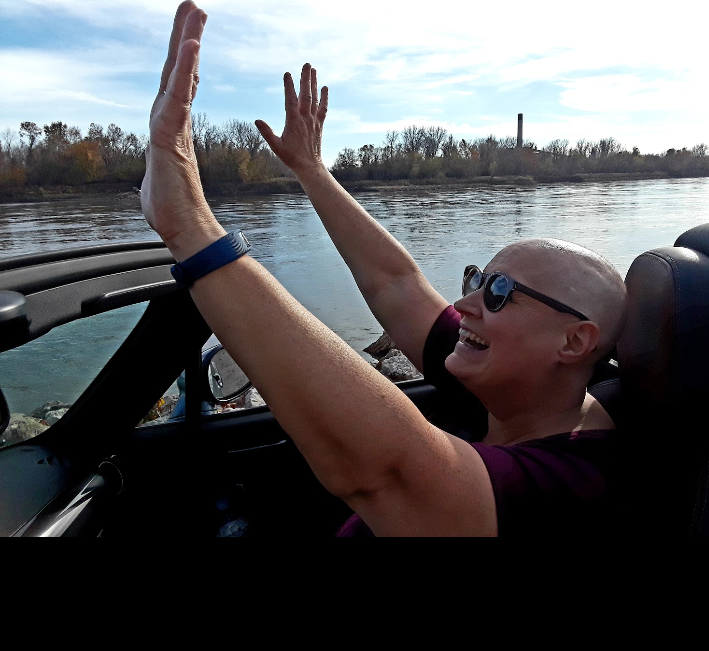
About Saint Luke's Hospital Koontz Center for Advanced Breast Cancer
Saint Luke's Hospital Koontz Center for Advanced Breast Cancer is recognized as the first center in the nation dedicated exclusively to the comprehensive care of Stage 4 breast cancer, also known as metastatic breast cancer.
Our singular purpose is to improve outcomes for patients with metastatic breast cancer while working toward a cure, helping them live longer while living better.
Relevant News
News
KSHB: Sporting KC Players Visit Patients Battling Cancer at Saint Luke’s Cancer Institute
News
Health News You Can Use: Breast Cancer Awareness Month: High Risk Breast Clinic
Patient Stories
Hip Replacement Helps LeeAnn Find a Good Night’s Sleep
News
KSHB: Innovative Treatment Combination for Metastatic Breast Cancer Takes Patient From Near Death to Life
News
FOX 4: Kansas City Oncologist: New Cancer Drug Is ‘Just the Tip of the Iceberg’
Patient Stories