Still Running: Kansas City Man Racing Ahead After Heart Surgery
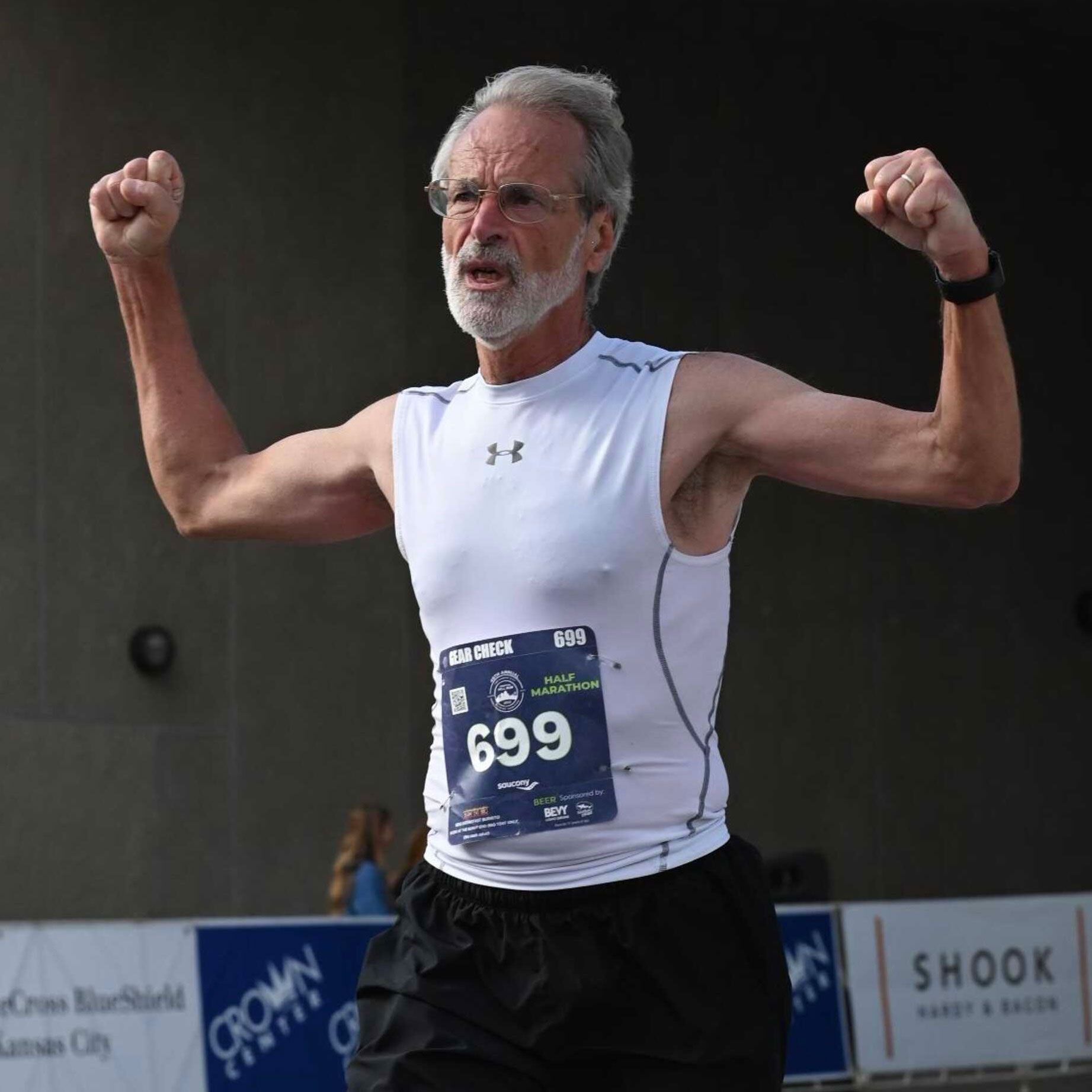
For 73-year-old Donald Scott, running is part of life. After retiring from practicing law in Kansas City, he set a new goal for himself: get in shape and stay in shape. He had run distance races for more than 40 years but began training more regularly after he retired. But when he started noticing slower race times and shortness of breath in 2025, he turned to Saint Luke’s Mid America Heart Institute for help.
“Something just felt off,” Donald says. “I had more than 300 races under my belt, but in those last few, I could feel my heart working harder to keep up. My mile times were even getting slower, so I decided to bring it up to my cardiologist.”
Heart trouble had always been on Donald’s radar. With a family history of heart disease, Donald began having periodic echocardiograms back in 2018 to proactively monitor his heart health. An echocardiogram is a noninvasive ultrasound test that uses sound waves to create real-time images of your heart’s shape and size.
Meeting the heart experts
In August 2025, Donald met with Kevin Bybee, MD, board-certified and fellowship-trained cardiologist at Saint Luke’s Cardiovascular Consultants, who reviewed Donald’s most recent echocardiogram. The echocardiogram showed that his aortic valve, one of the heart’s four main valves, had gradually narrowed over the years. By now, the valve had narrowed significantly. A narrow aortic valve places additional strain on the heart and can lead to chronic fatigue, reduced ability to exercise, shortness of breath, chest pain, dizziness, fainting, and ultimately death if untreated.
“I knew it was coming,” Donald says. “When Dr. Bybee told me it was time to act, I wasn’t shocked, but I was ready.”
Dr. Bybee referred Donald to Corinne Aberle, MD, a board-certified cardiothoracic surgeon, and her colleagues at the nationally recognized Saint Luke's Mid America Heart Institute. Additional imaging and evaluation revealed an abnormality with his aortic valve, called a bicuspid valve. Aortic valves typically have three leaflets, resembling the Mercedes® logo. Donald’s valve only had two. This condition, which he was born with, may lead to early valve breakdown and cause extensive mineral and calcium build up.
Making the right plan
“With the level of calcium buildup in Donald’s aortic valve, plus his bicuspid anatomy, we were concerned that a transcatheter valve wouldn’t seal properly,” Dr. Aberle says. For patients like Donald, surgery offers better outcomes than traditional transcatheter therapies. Most aortic valve surgeries are completed via sternotomy, also known as “splitting the chest open.” However, Dr. Aberle and her colleagues offer the region’s only state-of-the-art, minimally invasive aortic valve surgery. This procedure would allow Dr. Aberle to remove Donald’s native valve and calcium debris, then sew in a replacement valve—all through a small incision in his upper chest. This technique offers many benefits, including less blood loss, less pain, no broken bones, and possibly an earlier recovery.
During a preoperative consultation, Dr. Aberle and her team took extra time to walk Donald through the entire procedure. They drew diagrams of his heart on a whiteboard, showing him exactly where the calcium buildup was located and how the surgery would help.
“The first thing Dr. Aberle told me was that I would tolerate this surgery well,” Donald says. “She was honest, clear, and confident. That made all the difference to me.”
In September 2025, Donald underwent a minimally invasive valve replacement surgery. The procedure went smoothly, and he was discharged home after only three days in Saint Luke’s Hospital of Kansas City.
“I call Dr. Aberle a magician,” Donald says. “She did all of that through a 3-inch hole in my chest. I couldn’t believe it.”
Running into the future
Cardiac rehabilitation was the next part of Donald’s journey to recovery. Over the course of more than 30 rehab sessions at Saint Luke’s, Donald gradually increased his walking and jogging speed on the treadmill to condition his heart and get back to his normal activity level.
“Within a week, I was walking a mile,” Donald says. “Two weeks later, I started jogging again. I knew I had a long road ahead, but I couldn’t wait to run again. I’d go back every week and increase the speed a bit. By January 2026, I was hitting speeds that I hadn’t seen in quite some time.”
Today, Donald continues his rehab program with the goal of running a half marathon at a solid pace. He hopes others will take his story as a valuable reminder to listen to your body and seek medical attention when something doesn’t feel right.
“Even if you’re highly active, the symptoms can sneak up on you,” Donald says. “Dr. Aberle and Saint Luke’s didn’t just fix my heart—they got me back to what I love most.”
Mid America Heart & Lung Surgeons along with the Valve & Structural Heart Center at Saint Luke’s Mid America Heart Institute offer a comprehensive, multidisciplinary approach to treating heart valve disease. The Center brings together a highly skilled team of cardiologists and cardiothoracic surgeons to provide patients the full range of high-quality surgical and transcatheter valve disease treatments.
Get more information about our valve disease program.
Relevant News
Patient Stories
Walking a New Path: How One Patient Turned Pain Into Passion
News
Health News You Can Use: Saint Luke's Complex Aorta Disease Program
Patient Stories
16,000 Steps A Day: Gina’s Bariatric Surgery Transformation
Patient Stories
Wife’s Quick Thinking Helps Husband
Patient Stories
Emergency Heart Care Helps Joan Celebrate Life’s Big Moments
Patient Stories