A Simple Check-In Could Save a Life: How to Talk to Older Adults About Suicide
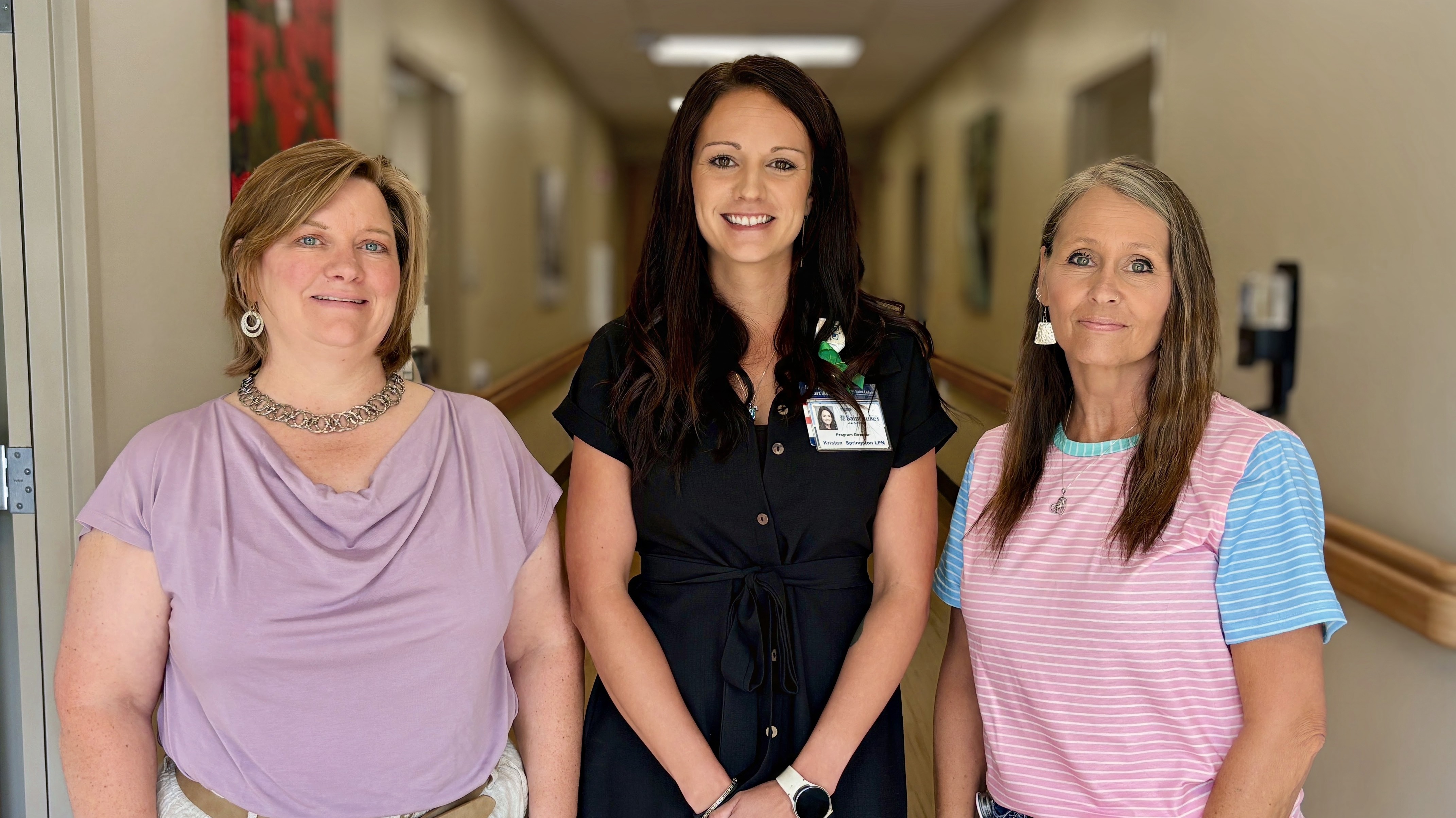
Anderson County Hospital Senior Life Solutions team members pictured from left to right are Mary Sumner, therapist, Kristen Springston, program director, and April Renfroe, patient coordinator.
No one wants to imagine that a parent, grandparent, neighbor, or close friend might be thinking about suicide. And let's be honest, bringing up the subject can feel uncomfortable.
But here's the truth: asking someone about suicidal thoughts is one of the most caring things you can do.
“Older adults are often reluctant to share their thoughts and feelings voluntarily,” says Mary Sumner, LMSW, a licensed therapist with Anderson County Hospital’s Senior Life Solutions in Garnett, Kansas. “They simply were not raised in a way that made it OK to talk about their problems. Starting the conversation lets the person know you care and that it’s OK to talk about it.”
Why older adults are at greater risk
When we think about suicide, we often think about teenagers or young adults. But older adults, especially those age 75 and older, have some of the highest suicide rates in the country, according to the Centers for Disease Control and Prevention (CDC).
Life changes that come with aging can be difficult to navigate. Health problems, chronic pain, financial concerns, the loss of loved ones, and social isolation can leave some seniors feeling overwhelmed or hopeless.
What's more, older adults experiencing depression may show signs that loved ones don't immediately recognize. Instead of talking about sadness, they may focus on physical aches and pains, withdraw from activities they once enjoyed, or quietly convince themselves that they don't want to burden anyone with their problems.
“So often I’ve heard from our older adults, ‘I don’t want to bother them, they are busy,’ as a reason why they don’t initiate phone calls or visits with friends or family members. That's why it’s so important to be the one to initiate contact and have real conversations with the older adults in your life,” says Mary.
How to start the conversation
You don't need special training to talk with someone you care about. You just need compassion, patience, and a willingness to listen.
“We may think we know how someone is feeling, but unless we are visiting regularly—by phone or in person—we cannot have a clear understanding of what their day-to-day looks like or what’s on their mind,” says Mary.
Here are some suggestions to help you get started:
Start with what you've observed. Rather than jumping to conclusions or diagnosing them, gently share your concern. You could say: “You haven't seemed like yourself lately, and I've been a little worried about you. Would you like to talk?” This kind of approach feels supportive rather than confrontational.
Pick the right moment. Timing matters. A rushed conversation in a crowded restaurant probably isn't the best setting. Instead, choose a quiet moment where both of you feel relaxed. A walk around the neighborhood, a drive, or sitting together at the kitchen table can create a more comfortable environment for an honest discussion.
Be direct and kind. Many people worry that asking about suicide will put the idea into someone's head, but research from the National Alliance on Mental Health (NAMI) shows that it does not. In fact, asking directly can provide relief for someone who has been carrying those thoughts alone. Try saying: “Sometimes when people are dealing with health problems, grief, or major life changes, they think about suicide. Have you been having thoughts like that?”
Using the word suicide may feel uncomfortable, but clear language helps avoid confusion and shows you're not afraid to talk openly.
What if someone tells you they’ve been having suicidal thoughts?
“Hearing someone admit to having suicidal thoughts can feel like it requires heroic steps,” says Mary. “You don’t have to be a counselor or expert; there are resources out there to help guide you. You’ll first need to recognize how you’re feeling, then force yourself to take a deep breath and remember you, too, are not alone.”
Once you've asked the question, be ready to listen, stay calm, and respond with compassion. A supportive, nonjudgmental reaction can help reduce feelings of isolation and encourage the person to accept help and stay connected.
Thank them for being honest. Opening up about suicidal thoughts takes tremendous courage. You might respond: "Thank you for telling me. I know that couldn't have been easy."
Reassure them they're not alone. Let them know you care and that help is available. Try saying: “We'll figure this out together. You're important to me, and I want to help.”
Help them take the next step. Ask whether they'd be willing to talk to their family doctor, mental health professional, or trusted family member. You can offer practical help, including making a phone call, scheduling an appointment, or going with them for a visit.
Know when it's an emergency. If they tell you they have a specific plan to end their life or have access to the means to do so, treat it as an emergency. Stay with them and seek immediate professional help by calling 911.
What if they deny having suicidal thoughts?
Even if the answer is no, the conversation still matters. Sometimes people aren't ready to share everything they're feeling right away. Your willingness to ask shows them that you care, so even if their response seems uncertain, you can gently keep the door open. You could say: “That's OK. I just want you to know that if things ever start to feel overwhelming, I'm here to listen.”
“Remember that older adults tend to be less comfortable talking about their problems,” says Mary. “Their desire to protect and take care of others may hold them back from being completely open about how they are feeling.”
“This is not a ‘one and done’ conversation. Please stay in touch with your older family members, friends, and neighbors, especially those who live alone. Even small gestures can have a tremendous impact on their mental health.”
Continue to watch for warning signs
Suicidal thoughts don't always come with admission or obvious warning labels, but there are some signs that should never be ignored. If you observe any of these behaviors, it's important to have another conversation:
Talking about death. Comments like: “Everyone would be better off without me,” or “I wish I wasn't here anymore,” may indicate serious emotional distress.
Pulling away from others. Someone who begins withdrawing from family, friends, hobbies, or community activities may be struggling more than they appear.
Changes in mood. Watch for significant shifts, including increased anxiety, irritability, hopelessness, anger, or unusual emotional numbness.
Engaging in risky behaviors. Increased alcohol use, reckless behavior, or neglecting personal safety or the safety of others can sometimes signal deeper emotional pain.
Feelings of hopelessness. Statements like “Nothing will ever get better,” or “There's no point anymore,” should always be taken seriously.
If you know someone has attempted suicide in the past, it is important to remain especially attentive and supportive. A history of a previous suicide attempt is one of the strongest indicators of future suicide risk, regardless of how long ago it occurred.
By staying aware of warning signs and maintaining ongoing support, you can play an important role in helping ensure they receive the care and assistance they may need.
Anyone can save a life
Talking about suicide may feel difficult, but silence can be far more dangerous. By asking caring questions, recognizing warning signs, and helping connect someone to support, you could make a lifesaving difference.
If you or someone you know is experiencing difficult or suicidal thoughts, call or text 988 to reach the Suicide & Crisis Lifeline. Help is available 24/7. If there is immediate danger, call 911.
Senior Life Solutions is here to help
Anderson County Hospital’s Senior Life Solutions offers a hospital-based outpatient group therapy program designed to meet the unique needs of older adults experiencing depression or anxiety related to life changes that are often associated with aging or a chronic diagnosis.
“Ideally, patients come into to our program before they reach a crisis point,” says Mary, “but we can help with a variety of needs, no matter where they are in their journey.”
The team includes a psychiatrist, nurse, therapist, and other clinical staff that provide whole-person support for patients. The program follows a group therapy approach with sessions scheduled up to three days a week, depending on a patient’s needs. In addition, individual and family therapies are also offered to help improve personal insight, strengthen family relationships, and enhance communication.
“Confidentiality, respect, and dignity are core values upheld and practiced by treatment team members and patients alike,” say Mary. “Earning a patient’s trust is an important part of our program, and an important step toward healing.”
Anyone can make a referral or reach out for help
Referrals typically come from friends, family members, neighbors, ministers, local physicians, or other health care team members. Individuals can also self-refer.
“We frequently receive referrals from former Senior Life Solutions patients,” says Mary. “To me, that says a lot about the impact of our program. When people experience positive change themselves, they want to help their friends and family find that same support and hope.”
To learn more about Anderson County Hospital’s Senior Life Solutions, to seek support for yourself or an older adult you care about, or for general information on mental health resources in your community, call 785-204-8043 or visit SaintLukesKC.org/Senior.
Relevant News
Article
Joint Replacement Surgery: Five Things to Know
Article
KSHB: Healthy and Affordable School Lunch Tips With Saint Luke's
Article
Helping Kids Start the School Year Strong
Article
Health News You Can Use: Saint Luke's Crohn's and Colitis Center of Excellence
Article
Celebrating the Heart of Anderson County Hospital: Our Volunteers
Article