RELIVE Trial Gives Kenneth New Strength After Heart Attack
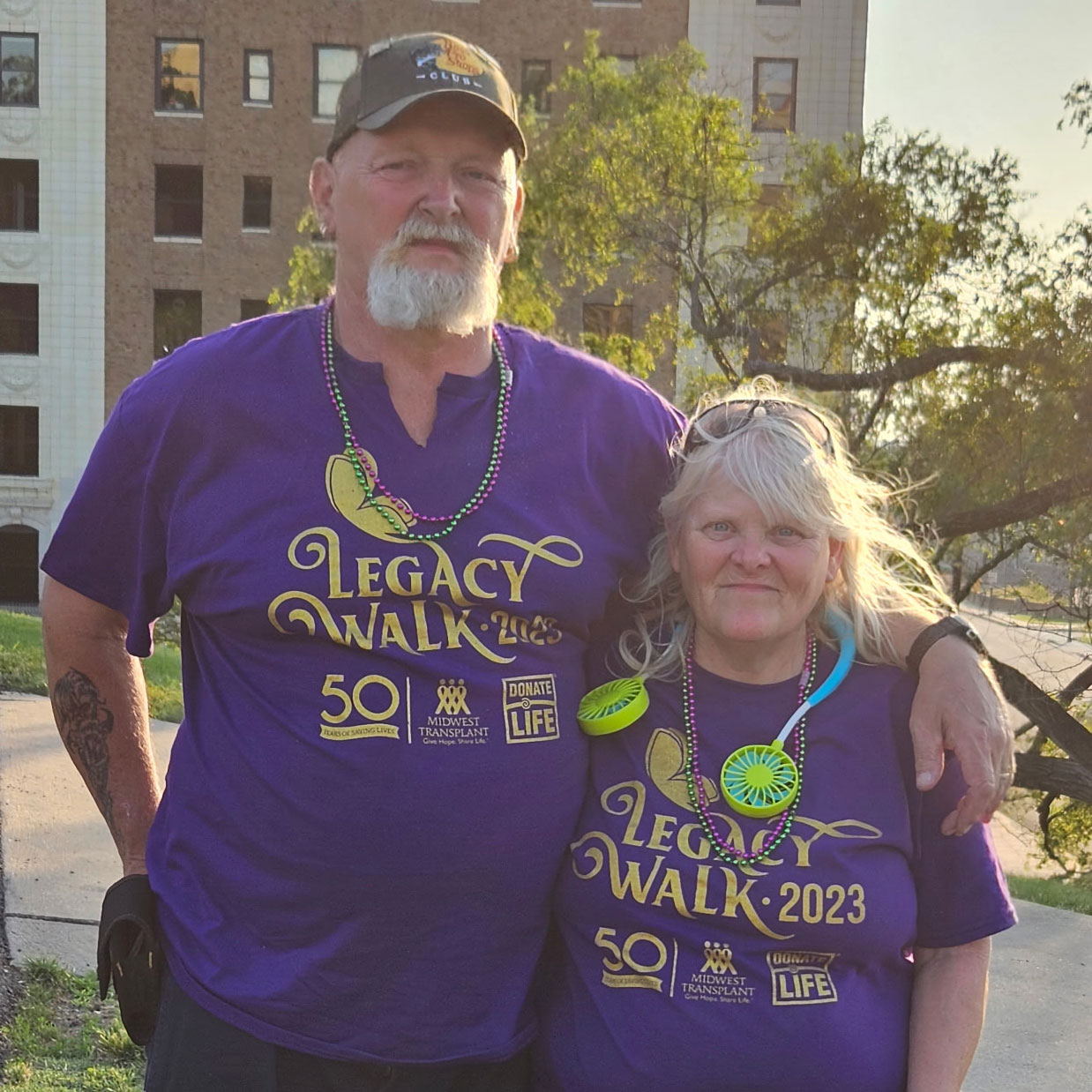
Fifteen years ago, while living in New York, Kenneth Sondermeyer started having increasing shortness of breath. Maybe it was asthma, he thought. He went to his primary care provider, who sent him to see a cardiologist.
After an echocardiogram, Kenneth’s cardiologist told him his heart was enlarged because of a heart attack.
“My wife and I were looking at each other like, ‘What are you talking about?’ I never knew I had a heart attack,” he says.
Kenneth had experienced a silent heart attack, which occurs when blood flow to the heart is blocked without any noticeable pain. Left unchecked, these heart attacks can still cause permanent damage to the heart and increase the risk of more severe heart attacks.
While in New York, Kenneth worked with his cardiologist to do everything he could to keep his heart strong: cardiac catheterization, double bypass, valve replacement, and a pacemaker-defibrillator. He saw his cardiologist every few months for monitoring.
Kenneth later moved to Missouri, which led him to the experts at Saint Luke’s Mid America Heart Institute and a lifesaving clinical trial.
Seeking the region’s best
In 2022, Kenneth and his wife planned to move to the Midwest for a change of scenery. He knew he needed to find a specialist who would be able to help manage his complex medical history.
His New York-based cardiologist helped him find Andrew Kao, MD, a heart failure cardiologist at Saint Luke's Cardiovascular Consultants. While Dr. Kao's office is an hour from where Kenneth now lives with his wife in Deepwater, Missouri, the drive has proven to be worth it.
“I trust Dr. Kao with my life,” Kenneth says. “He’s good at checking in and, based on all my test results, he always can tell exactly what's going on with my heart.”
The move to Missouri reinvigorated Kenneth until he contracted COVID-19 that September. After transferring from his local hospital, he spent five days at Saint Luke’s Hospital of Kansas City. There, Kenneth’s doctors discovered his mitral valve was not opening properly, prompting a valve-in-valve replacement.
Despite a newly functioning valve, Kenneth remained increasing short of breath, preventing him from working.
“In Kenneth’s case, his heart attack caused the tip of his heart to form a scar.” Dr. Kao says. “Scar tissue cannot squeeze and pump blood, so the healthy part of his heart had to work overtime to compensate.”
With every heartbeat, blood is squeezed against the scar, which cannot contract. Over time, this increase in pressure causes the scar to expand, which holds more fluid and further complicates breathing.
“It’s like running a three-legged race,” Dr. Kao says, “which makes it much harder to run since the ‘extra leg’ slows down the run.”
Kenneth needed an innovative solution.
A chance to RELIVE
In the past, surgeons would cut out the scar and put a patch over it to reshape the heart and make the heart contract closer to how it normally would. Unfortunately, this involves open heart surgery with substantial risk. So, Dr. Kao offered Kenneth an experimental option in a clinical trial. Kenneth was happy to be a participant.
Kenneth took part in the RELIVE (Randomized Evaluation of Less Invasive Ventricular Enhancement) clinical trial, a national research study that evaluates a new treatment option for those with advanced heart failure following a heart attack.
The study focuses on the Revivent System, an investigational device designed to help the heart pump more effectively by reshaping areas of the heart damaged by the heart attack.
Led by cardiothoracic surgeon Jessica Heimes, DO, Kenneth had a procedure in November 2025 to implant the device to close off the scar tissue in his heart, helping the heart contract normally.
“If this trial helps me and then helps other people, why not do it?” he says.
Saint Luke’s is among four heart centers participating in the trial, supporting its longstanding role in advancing cardiovascular research and bringing emerging therapies to patients.
“The RELIVE trial allows patients an additional option for heart failure therapies,” Dr. Heimes says. “The anchors allow us to safely decrease the nonfunctioning heart muscle to allow the heart to beat more efficiently.”
Kenneth recovered quickly and was discharged from the hospital three days after surgery. And he has not looked back since.
Back to work
The trial has helped Kenneth’s heart function much better than when he was living in New York, which has helped him get back to work part time as a delivery driver. He’s able to carry loads heavier and farther than he could in recent memory.
Looking for more ways to stay active, Kenneth got a bike for Christmas, which he hopes to ride when the weather is warmer.
Given all these opportunities, Kenneth is grateful to be standing where many of his family couldn’t.
“Heart problems have been in my family for generations,” he says. “I’ve already lived the longest of the men.”
Today Kenneth isn't taking the extra years the RELIVE trial has given him for granted. While his grandfather, father, uncle, and nephew all passed away from heart disease, he hopes the findings from this trial will give others with heart issues the opportunity for a longer, healthier life.
About Saint Luke’s Mid America Heart Institute
In 1981, Saint Luke’s Mid America Heart Institute opened its doors as the world’s first free-standing, dedicated heart hospital, focused specifically on caring for patients with cardiovascular disease. Today, our nearly 200 board-certified specialists and cardiovascular experts provide world-class care to more than 250,000 total patients annually.
The Heart Institute's cardiovascular research program encompasses clinical areas as well as centers of excellence and core laboratories. It continues to serve as one of the four Analytic Centers, along with Duke, Harvard, and Yale, for the American College of Cardiology's National Cardiovascular Data Registry.
Relevant News
Patient Stories
Walking a New Path: How One Patient Turned Pain Into Passion
News
Health News You Can Use: Saint Luke's Complex Aorta Disease Program
Patient Stories
16,000 Steps A Day: Gina’s Bariatric Surgery Transformation
Patient Stories
Wife’s Quick Thinking Helps Husband
Patient Stories
Emergency Heart Care Helps Joan Celebrate Life’s Big Moments
Patient Stories