100 Days in the NICU, A Lifetime of Resilience
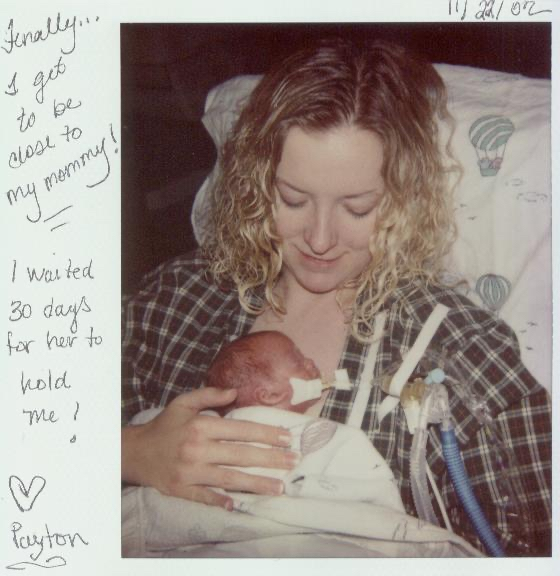
On Oct. 23, 2002, Jennifer Reents-Dickkut was supposed to celebrate her 28th birthday with a quiet night at home. Instead, she found herself in a hospital in St. Joseph, Missouri, delivering twin girls at just 25½ weeks gestation.
Each baby weighed barely more than a pound, requiring advanced neonatal care. Outside, a cold October mist grounded LifeFlight helicopters. Inside, the care team was doing their best to help Jennifer find a nearby neonatal intensive care unit (NICU). Nearby hospitals were overflowing with premature babies, so finding a place that could admit both girls was a challenge.
Thankfully, they found an opening at Saint Luke’s Hospital of Kansas City’s Level III NICU, which provides exceptional care for extremely low gestational age newborns (ELGANs). The twins, Annika and Payton, took separate ambulances to Kansas City, more than an hour away.
Grace in the midst of chaos
When Jennifer and her husband, Kurt, arrived at Saint Luke’s, a team of doctors and nurses met them at the door. Other families in the NICU supported Jennifer and Kurt with prayers for their babies.
“That was our introduction to the NICU,” Jennifer says. “Full of kindness and grace.”
For the next 100 days, the twins, fragile and fighting, required ventilator support, slowly weaning as their lungs matured and became stronger. Jennifer moved into the Ronald McDonald House in Kansas City so she could stay close. Nurses taught her how to scrub in, how to care for her daughters inside their isolettes, and they gave her blankets to take home to feel connected.
Jennifer’s care team never stopped informing, educating, and empowering her. They gave her research, answered every question, and helped her babies overcome the many challenges they faced. At 30 days, despite ventilators and wires, Jennifer and Kurt were allowed to hold their daughters for the first time.
“The doctors told us, ‘The parents need to hold their kids,’” Jennifer says. “That meant everything.”
The future they fought for
When the twins finally went home after 100 days in the NICU—still on oxygen, still vulnerable—they had many more obstacles to overcome. They each required eye surgeries for retinopathy of prematurity (ROP), an eye disease resulting from abnormal blood vessel growth in the retina. They spent years adapting to vision loss and countless follow-ups.

But if those 100 days in the NICU proved anything, these were resilient babies.
Today, Payton and Annika are 23 years old. Payton graduated from the University of Kansas and works in human behavioral sciences. Annika is finishing her music education degree and preparing to be a student teacher. They drive, live independently, and thrive.
Jennifer looks back on their NICU days with gratitude.
“A million things could have gone wrong in those 100 days,” she says. “But the staff navigated all of them. The team at Saint Luke’s gave us the truth, the tools, and the kindness we needed. Because of them, my girls are here—and they’re beautiful.”
About Saint Luke’s Hospital of Kansas City Maternity Center
At Saint Luke’s Hospital of Kansas City Maternity Center, we deliver more than 2,000 babies each year and offer a range of services from low intervention deliveries to complex care for mothers and babies with the greatest medical needs.
Saint Luke’s Hospital of Kansas City also offers a Level III NICU, where our specially trained staff cares for babies born at 22 weeks gestation or greater, as well as babies born with critical illness at all gestational ages.
Relevant News
Patient Stories
Walking a New Path: How One Patient Turned Pain Into Passion
Patient Stories
16,000 Steps A Day: Gina’s Bariatric Surgery Transformation
News
Media Coverage: Saint Luke’s Hosts Annual NICU Reunion for Former Patients
Patient Stories
Wife’s Quick Thinking Helps Husband
Article
Health News You Can Use: Saint Luke's Crohn's and Colitis Center of Excellence
Patient Stories