Varicose Veins
Venous disease refers to all conditions related to or caused by veins that become incompetent or nonfunctional.
Varicose veins are caused by issues with the valves within a vein. Usually, the valves in your leg veins keep blood flowing toward the heart. When the valves are damaged or missing, it can cause blood to pool in the vein.
Symptoms
The symptoms of varicose veins include:
- Aching, painful legs
- Heaviness
- Fatigue, tiredness
- Itching, burning
- Leg cramping
- Leg restlessness
- Throbbing
- Swelling
- Cellulitis
- Leg Ulcer
- Nighttime cramping

Treatment
Saint Luke’s Vein Center’s expert vein sonographers and board-certified cardiologists provide specialized treatment for varicose veins, including non-surgical, minimally invasive, and surgical treatment options:
- Exercise
- Compression stockings
- Weight loss
- Endovenous laser treatment (ELT): Minimally invasive ultrasound-guided technique
- Sclerotherapy: Shrinks varicose blood vessels by injecting medicine
- Ambulatory phlebectomy: Removing varicose vein using tiny incisions along the path of the enlarged vein
- VenaSeal™: Minimally invasive procedure, also known as cyanoacrylate embolization, which uses a medical adhesive to seal off and collapse the diseased vein, rerouting blood flow to nearby healthy veins
Surgery for Varicose Veins
Your treatment will be tailored to your needs. Varicose veins may be tied off (ligation), destroyed, or removed. Blood will then flow through the healthy veins. Most procedures that treat varicose veins are minimally invasive and have a short recovery period. Your doctor will pick the method that is safest and works best for your type of vein problem.
One or more of the following techniques may be used.
Ablation (laser or radiofrequency)
A tiny cut in the skin is made near the varicose vein. A small tube called a catheter is inserted into the vein. Energy or heat released from the catheter tip will make the vein walls collapse and stick together. This stops all blood flow through the vein.
Sclerotherapy
Your doctor will inject the varicose vein with a special chemical that will quickly close the vein from the inside. This is especially useful for smaller veins.
Microphlebectomy or ambulatory phlebectomy
A special hook is used to gently take out a varicose vein through tiny incisions. Microphlebectomy may be done in your doctor's office.
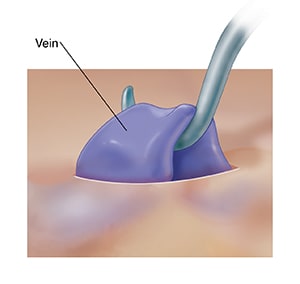
Vein stripping and ligation
In more severe cases, where larger, deeper veins are involved, the surgeon may tie off and remove veins by making smaller cuts in the skin. Smaller branching veins may also be tied off or removed. This procedure is more painful and may need a longer recovery than other treatment choices. Generally, vein stripping and ligation are advised only for people who cannot be treated with a less invasive procedure.
Know about the risks
Your doctor will talk with you about the risks these procedures. These may include:
- Bleeding or swelling
- A sense of numbness, burning, or tingling in areas near the procedure
- Edema or swelling in the legs
- Clots in the deep veins that may travel to the lungs
- Infection
- Scarring
Locations near you
Relevant News
Article