Preventive Mastectomy Helps Mother of Four Live with Clarity
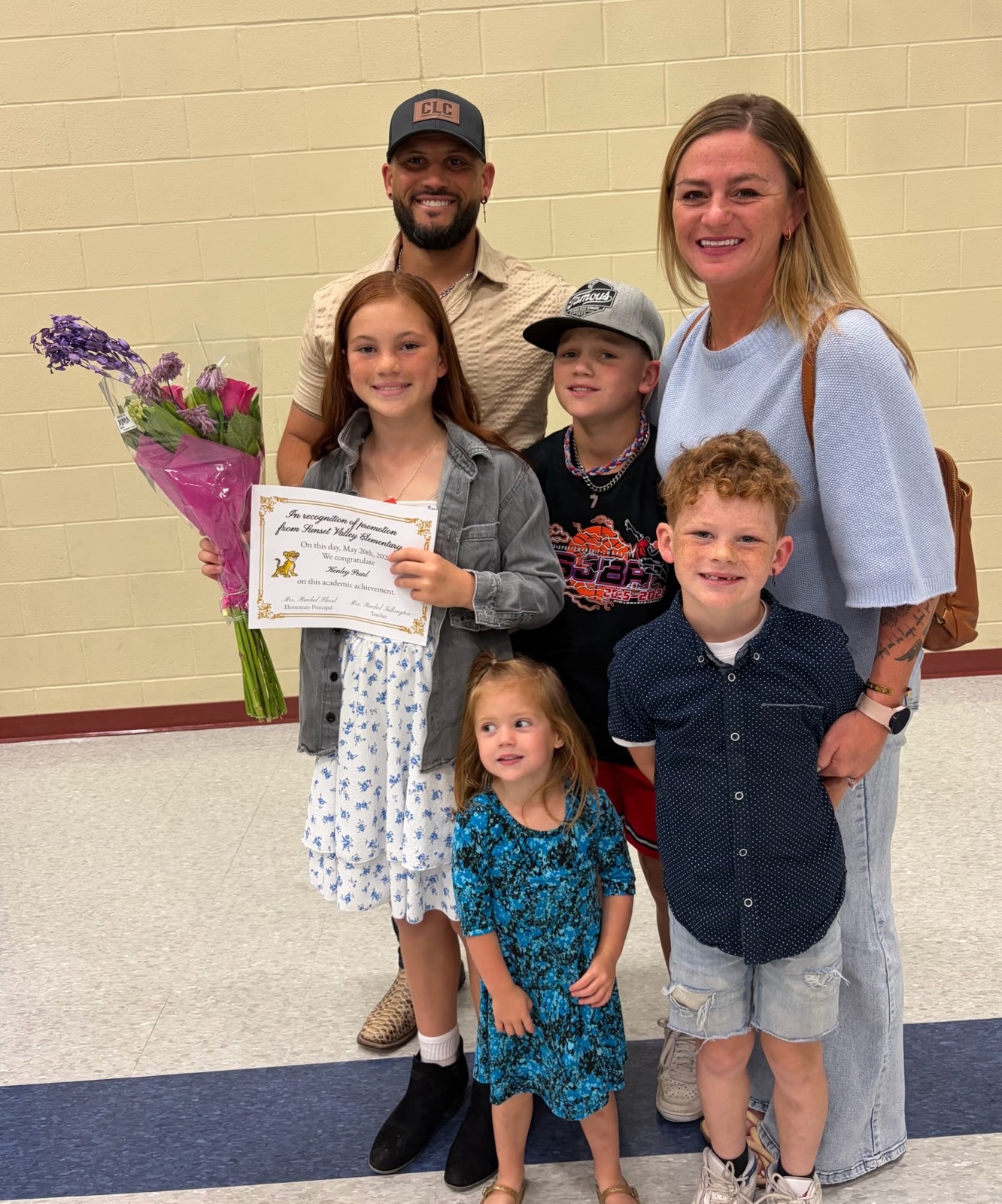 For most people, the decision to have a mastectomy comes after a breast cancer diagnosis. When Karissa Pearl, 36, learned she was high-risk for breast cancer, she chose to have a mastectomy before any sign of cancer.
She just wanted to live life with clarity.
While she’s only the second Saint Luke’s patient to receive an innovative endoscopic nipple-sparing mastectomy, this elective operation could become a more common preventive treatment for women with certain risk factors for breast cancer.
“As I get older, my risk of developing breast cancer is going to be through the roof,” Karissa says. “The procedure was truly preventive.”
And Karissa, a mother of four, wanted to focus on the best parts of her life instead of worrying about a dreaded diagnosis.
Saint Luke’s gave her that option.
A new solution
When she was 27, Karissa’s obstetrician recommended genetic testing because of a family history of breast cancer. The test revealed a PALB2 gene mutation, which is associated with increased risks for breast and pancreatic cancer.
Because of this heightened risk, Karissa went to Saint Luke's High Risk-Breast Clinic for monitoring and genetic counseling, with biannual appointments alternating between mammograms and breast MRIs.
“Those six-month checkups, though not time-consuming, were financially heavy,” she says. “That was reason enough to find a different solution, but it was mostly for the peace of mind.”
In 2025, Karissa learned Saint Luke’s had begun offering endoscopic nipple‑sparing mastectomy, a newer approach that removes breast tissue through a small, discreet incision while preserving the skin, nipple, and areola. The goal is cancer prevention with improved cosmetic outcomes compared to traditional mastectomy.
The endoscopic mastectomy itself is performed by a specially trained breast surgeon, who works with the plastic surgeon to evaluate patients for the most appropriate reconstruction strategy.
With this technique, patients must be a good candidate for nipple‑sparing surgery and implant‑based reconstruction that keeps them close to their current breast size. After endoscopic mastectomies, despite retaining their appearance, the nerves are removed, so the breasts don’t have any feeling.
Karissa was an ideal candidate: she was healthy, had minimal breast ptosis (drooping), and wanted implant‑based reconstruction that preserved her natural appearance.
“As with all reconstructive breast surgery, the decision is a collaboration between the breast surgeon, the plastic surgeon, and the patient,” says Brian Jao, MD, plastic surgeon at Saint Luke’s. “There is no standard pathway. Our role is to help patients understand their options and choose what best aligns with their goals.”
Saint Luke’s care teams are structured to support that level of personalization. Patients considering reconstruction also meet with a veteran nurse educator who specializes in guiding them through the decision‑making process.
Recovery from surgery typically takes six weeks, though regaining full strength and range of motion can take up to six months.
Karissa took time to make sure she was making the right decision. Even so, she says, simply having the option felt like a gift.
“Talking about the surgery didn’t feel scary,” Karissa says. “It was comforting to hear the reality. I waited until the timing was right in my life, knowing what recovery would require.”
 Recovering with clarity
In January, Karissa chose to have the procedure.
She spent years burdened by what the future might hold given her family history. The endoscopic nipple‑sparing mastectomy offered her a preventive approach that matched her desire to live life with confidence.
“I chose this, but it took a lot of brain power just to say, ‘OK, let's do it,’” she says. “People think that even though I’ve had surgery, it’s fine because I got new breasts. But I went through a lot to get to that point.”
While Karissa’s six-week recovery at home was difficult for her emotionally, the clarity that came with it has been transformative.
“There’s a large weight off you after you get it done,” she says.
She will eventually have to get screened for pancreatic cancer because of the PALB2 mutation but, for now, Karissa can focus on living fully alongside her husband while watching their children grow.
About Saint Luke’s Breast Centers
Whether you need a screening mammogram or breast cancer treatment, Saint Luke’s Breast Centers offer a full range of services and access to the latest imaging technology. Our breast centers feature a breast surgical oncologist and advanced practice providers with more than 30 years of experience in treating breast disease including cancers, high-risk, and benign breast issues. All our locations are accredited by the American College of Surgeons.
We take a team approach with multidisciplinary collaboration involving specialists in breast radiology, breast surgery, plastic surgery, medical oncology, radiation oncology, our dedicated high-risk clinic, and our genetic counseling program.
To schedule an appointment with Saint Luke's High-Risk Breast Clinic or a breast surgeon, call 816-932-7900, option 3.
Relevant News
News
KSHB: Innovative Treatment Combination for Metastatic Breast Cancer Takes Patient From Near Death to Life
Patient Stories
Walking a New Path: How One Patient Turned Pain Into Passion
Patient Stories
16,000 Steps A Day: Gina’s Bariatric Surgery Transformation
Patient Stories
Wife’s Quick Thinking Helps Husband
Patient Stories
Emergency Heart Care Helps Joan Celebrate Life’s Big Moments
Patient Stories