Radiation Oncology
If you’re being treated for cancer, radiation oncology may be part of your care. It’s natural to have questions about this treatment, and we’re here to walk you through each step. We provide advanced radiation therapy with fewer side effects because your complete well-being matters.
What is radiation oncology?
Radiation therapy is a common cancer treatment. It uses beams of high-energy X-rays or particles to kill cancer cells or keep them from growing.
What is cancer?
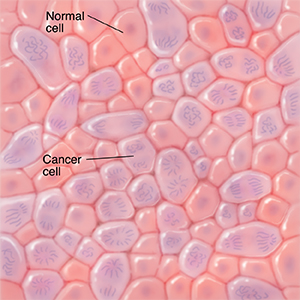
Normally, cells in the body grow and divide in a controlled way when they are needed. Cancer starts when cells change (mutate) and grow out of control. The changed (abnormal) cells often grow to form a lump or mass called a tumor. Cancer cells can also grow into (invade) nearby areas. They can spread to other parts of the body, too. This is called metastasis.
How radiation therapy works
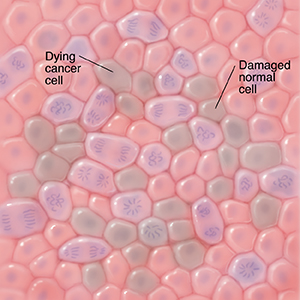
Radiation kills cancer cells over time by damaging the DNA in the cells. It works best on cells that are growing fast, like cancer cells.
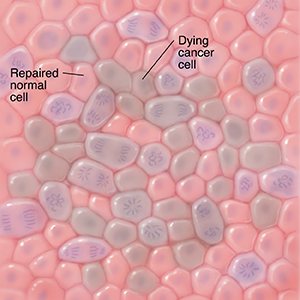
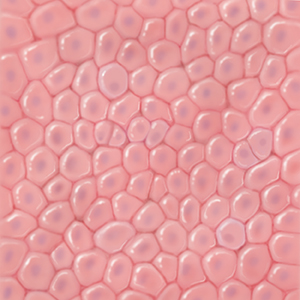
Radiation therapy is often given on consecutive days, usually Monday through Friday, over many weeks. The goal is to kill as many cancer cells as possible. Radiation can also harm or kill normal cells that are close to the tumor. But normal cells are better able to repair the damage to themselves than cancer cells can. As treatment goes on, more cancer cells are killed than normal cells. And the normal cells can fix themselves. Cancer cells can't fix themselves as well as normal cells can. Over time, the cancer cells die and are cleared by the body.
Types of radiation therapy
Different kinds of radiation therapy can be used to treat cancer. Here are the three main ways radiation is given.
External beam radiation therapy
With external beam radiation therapy (EBRT), a large machine aims high-energy beams at the tumor. The goal of treatment is to kill all of the cancer cells while limiting damage to normal cells. The machine moves so it can send the beams into your body from any angle.
Newer types of EBRT focus the radiation more precisely at the tumor. This helps to protect nearby normal tissues. These newer types include:
- 3-dimensional conformal radiation therapy (3-D CRT).
- Intensity-modulated radiation therapy (IMRT).
- Electron beam therapy.
- Proton beam particle therapy.
- Stereotactic radiosurgery (SRS) or stereotactic body radiation therapy (SBRT).
Internal radiation therapy (brachytherapy)
Internal radiation can use a solid radioactive source called an implant. The implant can be in the form of needles, wires, seeds, tubes, ribbons, capsules, or pellets. It is put right into or near the tumor. The implant may be permanent (left inside the body). Or it may be temporary (the radioactive sources are removed after treatment).
The implants mean the radiation can be put very close to the cancer cells. This type of radiation travels a very short distance. This helps focus the treatment on the cancer cells and spares nearby normal cells.
Systemic radiation therapy
Systemic radiation therapy travels through the entire body and is not just aimed at one area of the body. Radiation therapy can be given as a liquid that's swallowed or put right into your blood through a vein. Or it can be given as an injection (shot) of tiny radioactive beads that are put into a vein (IV) or artery at the tumor (called radioembolization). Sometimes, the radiation is attached to a special antibody. This antibody binds to the cancer cells and targets them with radiation. It moves through the blood to reach tumors anywhere in the body. Once the radiation attaches to the cancer cells, it gives off small, controlled doses to kill the cancer cells.
Locations

Saint Luke's Radiation Oncology Specialists–Plaza

Saint Luke's Radiation Oncology–Lee's Summit
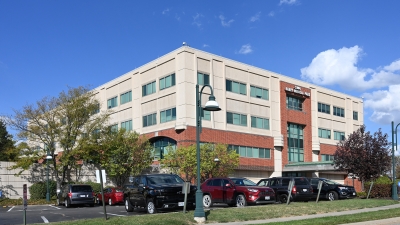
Saint Luke’s Radiation Oncology Specialists–Barry Road
Recent News
Patient Stories